Considering going solar? You’re among friends. From frustrated homeowners fed up with skyrocketing electricity bills to companies looking to go green, solar is the energy solution of choice.
It offers cleaner energy, lighter wallets, and an intelligent lifestyle. But don’t jump in just yet. There’s an essential question you can’t afford to avoid: Is your roof actually ready for solar?
Here’s the truth–installing solar isn’t just about buying panels and putting them up. Your roof plays the starring role in this energy transformation. If it’s too old, too weak, or shaded by nearby trees and buildings, your solar system won’t deliver the results you’re expecting.
And let’s be honest–investing in solar only to see disappointing output would be a frustrating setback.
The good news? You can discover whether your roof is ready for solar or if it just needs some prep time before inviting panels with just a quick checklist. In this blog, we’ll take you through the steps so you can make an informed, confident choice on your solar adventure.
2. Weak Roof = Weak Solar: Don’t Let Cracks Kill Your Savings
The cornerstone of any solar setup is your rooftop. If it is weak, the performance will stop. Consider it the stage of a play. If your roof is leaky, cracked, or old, even the top-of-the-line solar panels will not function as expected.
Here’s what to look for:
- Roof Age: You would like your roof to be anywhere from 15 to 20 years old. Older roofs may need repairing or replacing before being installed.
- Damage & Leaks: Once installed, after being visible, any wear and tear, water seepage, or cracks could lead to major issues.
- Professional Check: Having your roof inspected by a certified installer or structural specialist is always a good idea. They are able to determine whether it is secure and long-lasting enough for continuous solar use.
Your solar system will operate effectively for decades, save you money, and prevent needless repairs with a sturdy, well-maintained roof.
Keep in mind that making an initial investment in your roof is also an investment in your solar future.
3. Facing the Right Way: Why Roof Orientation Makes or Breaks Solar
Sunlight is essential to the survival of any solar system. If your roof isn’t tilted or facing the proper direction, even the best panels won’t save you the most money.
You should be aware of the following:
- Orientation: During the day, roofs facing south in India usually receive the most sunlight. East or west-facing roofs work as well, though you may lose some of their effectiveness.
- Tilt Angle: Panels placed at an optimal tilt, usually between 10 and 30°, depending on your region, increase overall energy production by absorbing more sunlight.
- Small Changes, Big Impact: Solar output and monthly savings can be significantly altered by even small changes to panel placement.
Pro Tip: To ensure your solar system operates at its best, a professional solar installer can measure the amount of sunlight on your roof and recommend the ideal tilt and orientation.
4. The Shadow Problem: How Shade Silently Steals Solar Power
Shade is the worst enemy of solar energy, but many homeowners are not aware of this. Even a small shadow from a nearby building, water tank, or tree can have a big impact on the efficiency of your panels and the amount of money you save.
Things to think about:
- Nearby Obstacles: Look for buildings, tall trees, or poles that could offer some shade in the hottest hours of the day.
- Roof Features: Chimneys, air conditioners, and water tanks can occasionally block sunlight.
- Daily Sunlight: For a successful solar system, your roof needs to receive four to five hours of direct sunlight every day.
A brief tip: Experts can measure shading patterns throughout the seasons using devices like solar pathfinders or apps.
This guarantees that your solar investment will pay for itself more quickly and that your panels receive the most exposure possible.
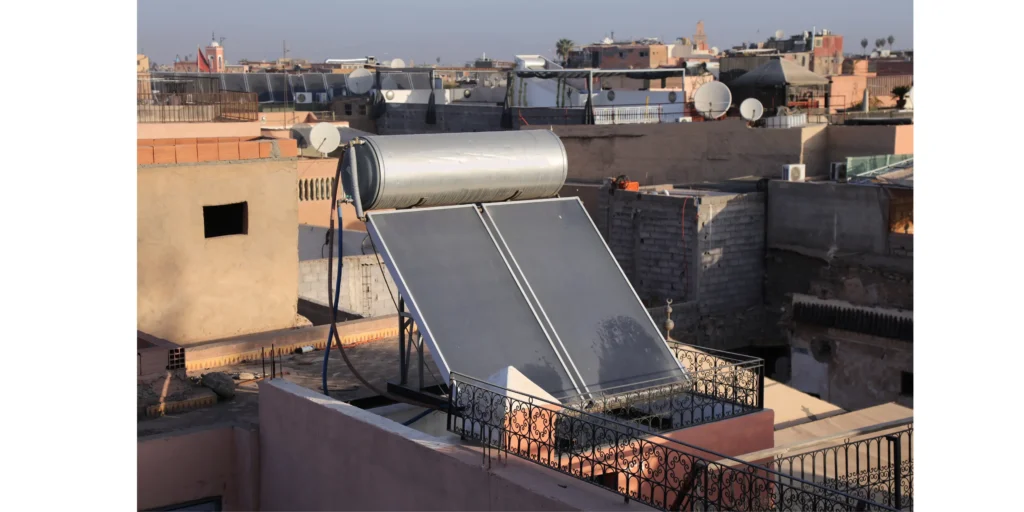
5. No Space, No Solar – Does Your Roof Have Room to Shine?
Does Your Roof Have Enough Space to Shine Without Solar?
If there is not enough room for panels, your solar system will not be saved by even the strongest, sunniest roof. Panels require space to shine, much like guests at a party.
Here’s what to look for:
- Space Needed: A 1 kW solar panel typically requires 100 square feet of roof space. Therefore, you’ll need about 300 to 500 square feet for a 3 to 5 kW system, which is typical for a family.
- Energy Requirements: The number of panels you require depends on how much electricity you use. More space means more panels, which means more savings.
- Load-Bearing Capacity: Weight is increased by mounting structures and panels. Make sure your roof can sustain them over time in a safe manner.
Pro Tip: The best panel arrangement can be suggested by a certified installer who can measure your roof. Your solar system can produce the most power and save money for decades if it has adequate room and strength.
6. Rules & Red Tape: Permissions That Power Your Solar Journey
Skipping approvals can put a stop to your solar dreams, even if your roof is sturdy, bright, and roomy. Permissions are your key to hassle-free, lawful solar installation; they are more than just paperwork.
Here’s what to remember:
- You can return excess electricity to the grid and receive credit on your bills if you have net metering approval. necessary to optimize savings.
- Housing Society Clearance: Prior to installing panels, obtain official permission if you reside in an apartment complex or gated community.
- State and Local Regulations: Certain states have particular laws pertaining to solar panels installed on rooftops. Delays and lost advantages can be avoided by checking early.
Pro Tip: You can benefit from subsidies, net metering, and a hassle-free solar experience if you obtain permissions before installation.
7. Big Bills, Big Solar – Matching System Size to Your Energy Needs
Not every solar system is the same. You won’t save enough money on bills if you install too few panels; installing too many might be pointless. The secret is to match the size of your system to the amount of energy you use.
Here’s one way to approach it:
- Check Your Usage: To determine your average monthly consumption, look at your electricity bills from the previous six to twelve months.
- Estimate System Size: Depending on sunlight, a 1 kW solar panel can generate 4–5 units of electricity per day on average. To cover your monthly usage, multiply this by the number of panels.
- Future-Proofing: To accommodate future demands, think about getting a slightly larger system if you intend to expand your house or add more appliances.
Pro Tip: By analyzing your usage, a certified installer can suggest the ideal size for your solar system, which will maximize efficiency and save you money.
8. Solar Isn’t Just Cost—It’s an Investment (and Subsidies Help!)
Going solar isn’t just about spending money; it’s about making a smart, long-term investment. The upfront cost may feel significant, but the savings on electricity bills and the boost in property value make it worthwhile.
Here’s what to consider:
- Installation Costs: Costs vary based on system size, roof type, and panel quality. But think of it as a one-time investment for decades of free energy.
- Government Subsidies: Schemes like PM Surya Ghar Muft Bijli Yojana and state-level incentives can significantly reduce your initial expenses.
- Long-Term Savings: Your solar panels will pay for themselves in just a few years through lower electricity bills—and then keep generating free, clean energy.
Pro Tip: Combining your budget with available subsidies ensures your solar investment is not only smart but also cost-effective from day one.
9. DIY Won’t Cut It: Why You Need a Solar Pro’s Inspection
“My roof looks fine, I can handle solar myself,” you may be thinking. Actually, even on the strongest and sunniest roof, a professional inspection is required to guarantee the safe and effective operation of your solar system.
The importance of a professional inspection is justified by the following:
- Structural Safety: Professionals assess whether your roof can support the weight of the mounting systems and panels.
- Optimal Positioning: To recommend the ideal panel arrangement, experts consider factors like shading, roof orientation, and sunlight exposure.
- Steer clear of costly mistakes: Even minor mistakes can result in damage, a void warranty, or a reduction in energy output.
Pro Tip: A certified solar installer, like Shakti Power Solutions, looks at your roof and gives you advice on panel selection, system size, and installation planning for maximum efficiency and peace of mind.
A professional evaluation will ensure that your solar journey begins in a safe, efficient, and stress-free manner.
Conclusion: Ready or Not, Solar Won’t Wait Forever
If your roof checks most of these boxes—strong structure, good orientation, enough space, and all approvals—you’re officially solar-ready. That means lower bills, cleaner energy, and a brighter future are just around the corner.
And if your roof doesn’t check every box? Don’t worry. With the right inspection and guidance, small issues can be fixed, and your home can still enjoy the power of solar.
Shakti Power Solutions provides complete solar support—from roof inspections and system design to installation and subsidy guidance. With expertise and trusted service, we make sure your solar journey is smooth, cost-effective, and future-ready.
Your roof has the potential to power your future—don’t let it wait. Start your solar journey with confidence.